A whitening kit is more than a pair of trays and a syringe: the gel formula, wear plan, cleaning method, and dentist review all affect how you use it. By the end, you will know which components to look for, how to follow the supplied schedule, and which symptoms require dental advice.
Key takeaways
- Look for custom trays, peroxide gel, written instructions, and a clinic contact process.
- Read the gel label for its peroxide type, concentration, expiry date, and storage instructions.
- Apply small gel amounts, follow the prescribed wear schedule, and never extend treatment yourself.
- Stop whitening if irritation persists, pain develops, or gel repeatedly contacts your gums.
The components you should find in the kit
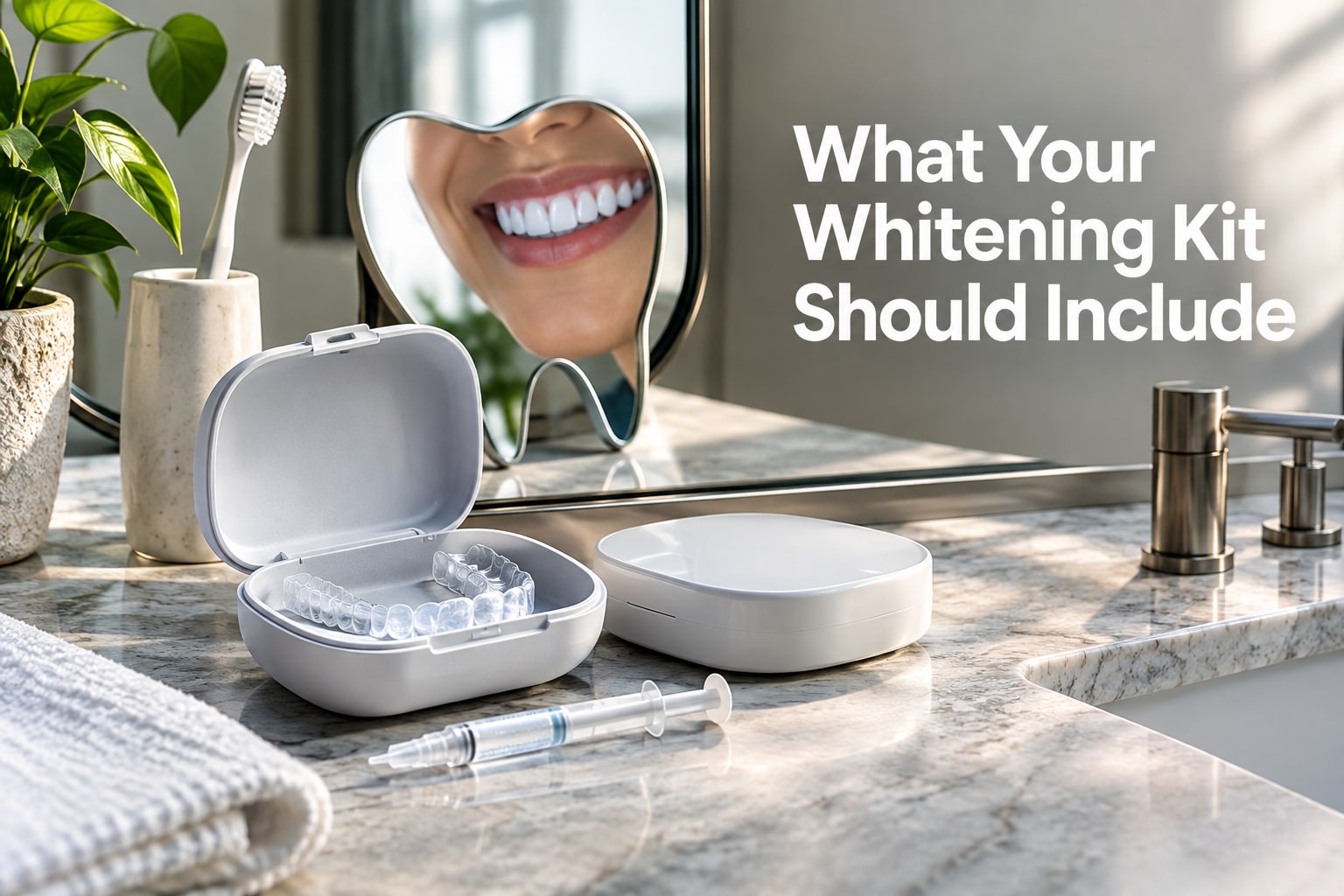
What is included in a home whitening kit depends on the clinic and product, but the core items are dentist-made custom trays, peroxide whitening gel, and clear instructions. Home whitening kit contents should also identify the wear schedule, storage method, and a contact or review process for problems.
Before taking the kit home, confirm these items:
- Custom trays that fit without pressing into your gums
- Gel syringes or cartridges, with the active ingredient and concentration printed on the label
- A fine application tip or clear instructions showing where to place the gel
- Written instructions stating the amount, wear time, frequency, and total treatment period
- A storage case and tray-cleaning guidance
- A shade guide, if the dentist plans to record your starting and finishing shade
- A desensitising product, if your dentist recommends one
- A phone number and follow-up date for questions, progress checks, or reactions
| Item | Confirm before leaving | Why it matters |
|---|---|---|
| Custom trays | Both trays are present and labelled for you | Poor fit lets gel reach the gums and wastes gel |
| Whitening gel | Syringes are sealed, in date, and match the prescribed product | The concentration determines the safe wear schedule |
| Instructions | They state your exact schedule, not a generic example | Copying another schedule can increase sensitivity |
| Review process | Know when to report pain and when the dentist will reassess | Whitening will not correct decay, gum disease, cracks, or leaking fillings |
What the gel label tells you about treatment
Read the syringe or carton for the active ingredient and concentration before using the gel. The usual bleaching agents are hydrogen peroxide and carbamide peroxide. Carbamide peroxide breaks down into hydrogen peroxide and urea; 10% carbamide peroxide provides about 3.5% hydrogen peroxide, but formulation and wear time also affect exposure.
The label does not give permission to copy another patient’s schedule. A higher concentration may require shorter wear, while a lower-concentration professional home whitening kit may be prescribed for longer or overnight use. Follow the dentist’s written instructions, because adding a light does not make an unsuitable gel or poorly fitting tray safe.
Your dentist should confirm that whitening is suitable by checking:
- Cavities, leaking fillings, cracks, gum disease, ulcers, and untreated tooth infection
- Severe or recurring sensitivity
- Crowns, veneers, fillings, and other restorations, which will not bleach like natural enamel
- Your age, pregnancy or breastfeeding status, and any reason to delay treatment
- Whether the custom trays fit closely enough to keep peroxide off the gums
Ask which concentration you received, how long to wear it, and when to report a problem. At Deshmukh Dental Clinic, those questions also help you confirm whether the dentist-supervised whitening kit matches your teeth, restorations, and sensitivity history rather than accepting a standard schedule.
Related service
Advanced Teeth Whitening (Bleaching) “Get professional whitening results at home! 😊 Our custom-fit Home Whitening Kits are designed to brighten your smile safely and effectively. View service → |
How to apply the gel and follow the wear schedule
Use the dentist-prescribed schedule, not timing copied from another whitening kit. Carbamide peroxide and hydrogen peroxide gels have different strengths and formulations, so wear time may mean a short daily session, several hours, or overnight use only when specifically instructed.
1. Brush your teeth and clean between them before filling the trays. Rinse away toothpaste, then follow the syringe instructions for attaching the application tip.
2. Place the specified amount of gel in each tooth compartment, on the surface that touches the front of the tooth. Do not overfill the tray; excess gel increases the chance of gum contact without whitening faster.
3. Seat the tray gently over your teeth and wear it for the prescribed time. Do not eat, drink, or sleep in it unless your written home teeth whitening instructions specifically permit overnight wear.
4. Remove the tray at the scheduled time. Spit out the gel, rinse your mouth with water, and wipe away any gel sitting along the gums.
5. Rinse the tray using the cleaning method supplied with the kit, then leave it dry before placing it in its case. Avoid hot water, which can distort custom tray material.
Stop the session and contact the dentist if the tray causes persistent pressure, has a large gap, or repeatedly pushes gel onto your gums. Never extend a session to compensate for a missed day; ask for the correct adjustment instead.
How to clean the trays and avoid re-staining teeth
Clean the trays after every session: rinse them with cool or lukewarm water, then use the cleaning method supplied with your professional home whitening kit. Some tray materials can warp with hot water, while abrasive toothpaste, bleach, or unapproved cleaners can scratch or damage them.
- Rinse your mouth after removing the trays and brush away any remaining gel.
- Wipe the trays gently with a soft toothbrush if the kit instructions allow it.
- Let the trays air-dry completely before placing them in their case.
- Store the case away from direct sunlight, heat, and pets.
- Follow the home teeth whitening instructions if they specify a particular tablet, brush, or cleaning solution.
Limit staining exposures throughout treatment and for the period your dentist advises after the final session. This protects the newly lightened surface from uneven colour.
| Exposure | What to do | Why it matters |
|---|---|---|
| Coffee, tea, cola, red wine, and dark fruit juices | Reduce them; rinse with water after drinking | Pigments can darken teeth during treatment |
| Curry, tomato sauces, berries, and soy sauce | Choose paler foods or rinse promptly | Strong colour compounds can stain |
| Citrus drinks and other acidic beverages | Limit them and do not swish them around your mouth | Acid can increase sensitivity |
| Cigarettes, cigars, vaping, and chewing tobacco | Avoid them during treatment | Tobacco stains teeth and irritates gums |
| Hot or strongly coloured foods immediately after whitening | Follow your dentist’s timing advice | Teeth can feel more sensitive after a session |
Sensitivity, gum irritation, and when to stop
Mild, short-lived tooth sensitivity and slight gum irritation are the reactions most commonly expected with a dentist supervised whitening kit. Sensitivity often appears during treatment or shortly afterwards; gum irritation usually follows gel touching the gum, rather than staying inside the tray.
| Reaction | What it means | Dentist-approved adjustment |
|---|---|---|
| Tooth sensitivity | Peroxide has irritated sensitive tooth areas | Shorten wear time, space applications, or use desensitising toothpaste or fluoride |
| White gum patches or mild soreness | Gel has contacted the gum | Remove excess gel, reduce the amount, or pause until the tissue recovers |
| Persistent or worsening pain | Whitening may be aggravating decay, a crack, exposed dentine, or another condition | Stop whitening and arrange a dental examination |
Do not increase wear time to compensate for a slower result. A professional home whitening kit works through its prescribed peroxide exposure; repeated unsupervised applications increase the risk of sensitivity and gum injury. Ask the dentist before changing the schedule, concentration, or product.
Stop treatment and seek dental review if you develop:
- Severe or lingering tooth pain after removing the trays
- Gum swelling, blistering, ulceration, bleeding, or pain that does not settle
- Facial swelling, widespread rash, or breathing difficulty; seek urgent medical help for breathing difficulty
- New pain from a cracked tooth, untreated cavity, or leaking filling
Do not begin whitening during pregnancy or breastfeeding, or if you are under 18, without specific professional advice. A dentist should review severe sensitivity, active gum disease, extensive restorations, or any untreated dental problem before treatment.
Frequently asked questions
What is included in a dentist-supervised home whitening kit?
Core home whitening kit contents include dentist-made custom trays, peroxide whitening gel, written home teeth whitening instructions, storage guidance, and a clinic contact or review process.
What does the whitening gel label tell you?
Check the peroxide type, concentration, expiry date, batch details, application directions, storage temperature, and warnings before using the gel.
How should you apply gel and follow the wear schedule?
Place the prescribed small amount in each tray space, seat the trays as instructed, remove excess gel from your gums, and follow the clinic’s exact wear time and number of applications.
How do you clean whitening trays and avoid re-staining teeth?
Rinse trays with cool or lukewarm water, clean them gently as directed, store them dry in their case, and limit staining foods and drinks during treatment.
When should you stop using a professional home whitening kit?
Stop and contact the clinic if you develop persistent or severe sensitivity, gum irritation, pain, swelling, or symptoms that do not settle after removing the trays.
Keywords