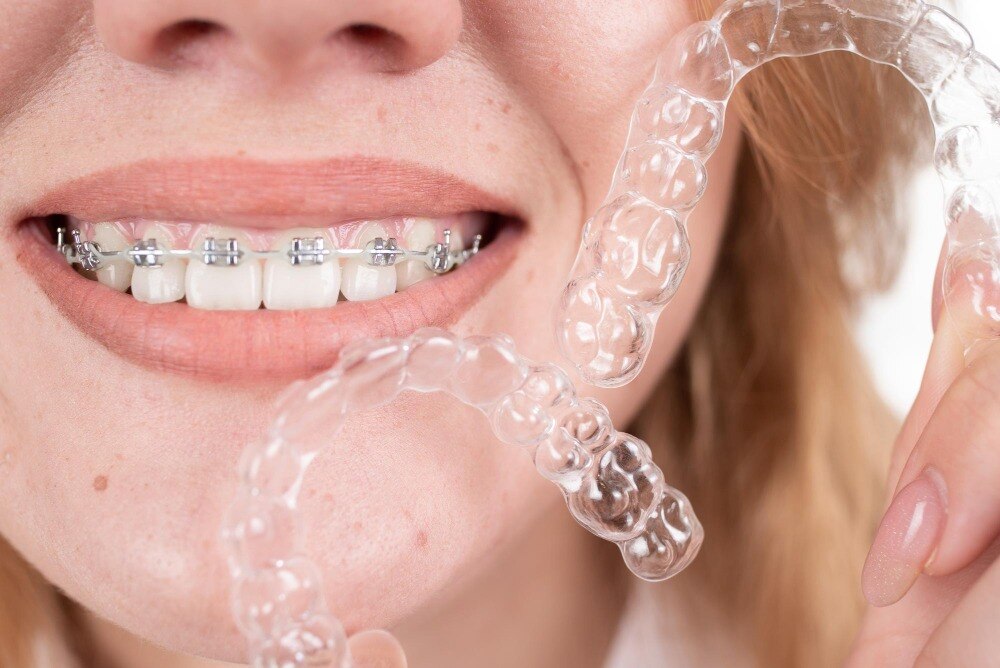
The right appliance depends on your bite, tooth movement needs, gum health and ability to follow a daily routine—not on which option looks less noticeable. By the end, you will know how to compare aligners with fixed braces, identify practical trade-offs and prepare for a consultation that includes diagnosis, treatment time and retention.
Key takeaways
- Treat decay and active gum disease before moving teeth.
- Choose based on the movement needed, not appearance alone.
- Aligners require consistent wear and removal for every meal and drink.
- Ask about appointments, refinements, retainers and the full treatment cost.
Start with your teeth, gums and bite—not the appliance’s appearance
An adult examination must establish whether the teeth, gums, supporting bone and bite are healthy enough for orthodontic movement, and what is causing the irregularity. Age alone does not rule out adult orthodontic treatment hinjewadi, but active gum disease or untreated decay needs treatment before braces or aligners.
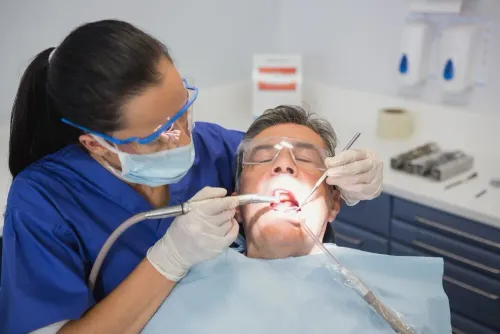
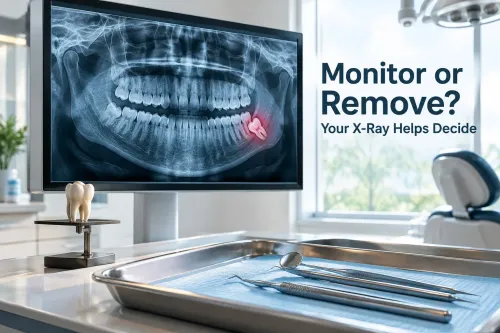
The clinician should take photographs, assess how the upper and lower teeth meet, and order appropriate radiographs. A cosmetic-looking front-tooth problem can hide periodontal bone loss, an impacted tooth, shortened roots, infection or a jaw discrepancy. Moving teeth without finding these problems can worsen damage or produce an unstable result.
| Examination finding | What it establishes | Why it changes the choice |
|---|---|---|
| Crowding, spacing and rotations | Which teeth need movement and how far | Severe rotations or large movements can favour fixed braces |
| Bite relationship | Whether the problem is dental or skeletal | A jaw discrepancy may require camouflage or jaw surgery discussion |
| Gums and supporting bone | Whether tissues can safely tolerate movement | Active gum disease or bone loss requires individual planning |
| Existing dental work | Limits created by crowns, bridges, implants or fillings | Teeth may need restorative or implant coordination first |
| Roots and impacted teeth | Hidden risks beneath the visible smile | Treatment may require monitoring, exposure or another procedure |
A remote scan or digital preview cannot replace this diagnosis. The treatment plan should name the bite problem, explain its cause and show how any periodontal, restorative or surgical issue will be managed.
Which option handles your specific tooth movement?
The best teeth straightening option for adults depends on the movement required, not the appliance’s appearance. Clear aligners for adults in Hinjewadi suit selected mild-to-moderate crowding, spacing and some bite corrections when you can wear each tray as prescribed.
| Option | Handles well | When fixed braces offer better control |
|---|---|---|
| Clear aligners | Mild-to-moderate crowding, spacing and selected bite adjustments | When teeth can track predictably and the required movements are limited |
| Fixed braces | Broad movement control with attached brackets and wires | Severe rotations, substantial movement, extraction-space closure, difficult vertical changes or complex bite correction |
Braces often provide more reliable control when a tooth must rotate extensively, move bodily through bone, or close a large gap after extraction. They also remain attached, so missed wear does not stop the planned force; aligners lose tracking when you leave them out or change trays before the teeth are ready.
A digital preview showing straight front teeth does not prove that the roots, bite or back teeth will finish correctly. Ask how the plan will control molar relationships, root position and any planned extractions, and whether refinements are included if tracking fails.
Choose aligners when the movements are suitable and you can manage removable trays consistently. Choose fixed braces when the diagnosis involves complex rotations, major space closure or difficult bite mechanics. An orthodontic examination and records should determine the option, not a short-term cosmetic result.
Compare the daily routine, cleaning and common problems
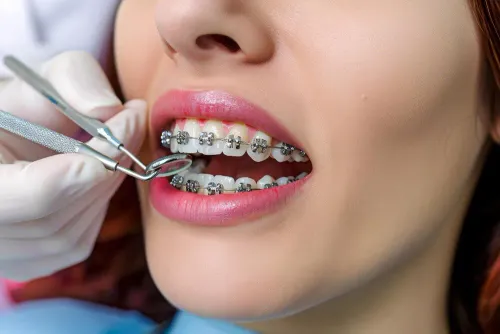
A braces versus aligners Wakad comparison becomes practical at mealtimes. Aligners come out for every meal and drink except water, then go back in after brushing your teeth; aim for roughly 20–22 hours daily. Braces stay attached, so avoid hard or sticky foods that can loosen brackets or bend wires.
| Option | Eating and speaking | Cleaning and handling problems |
|---|---|---|
| Clear aligners | Remove trays before meals. A temporary lisp can occur during the first few days. | Brush and floss before reinserting them. Rinse trays, store them in their case and never leave them in a hot car. Poor wear causes poor tracking, stalled movement or extra trays. A lost, cracked or tight tray needs prompt advice. |
| Fixed braces | Choose softer foods after fitting or adjustments. Speech usually changes less, but a loose bracket or wire can irritate your cheek. | Brush around every bracket, under the wire and along the gumline; use interdental brushes. Food trapped around brackets raises the risk of white-spot lesions, decay and gum inflammation. |
Aligners are easier to clean around, but wearing them over sugary drinks, tea or coffee traps residue against your teeth. Braces do not permit “taking a day off”; aligners do, but missed hours can extend treatment.
Keep orthodontic wax available for rubbing brackets, and contact the clinic if a wire pokes, a bracket breaks or an aligner no longer fits. The best braces versus aligners Wakad choice is the routine you can maintain safely.
Weigh compliance, appointments, treatment time and budget
Compare the total commitment, not just the starting quote. Ask for an estimated active-treatment range, the refinement policy, review schedule and retention plan in writing before choosing clear aligners or braces for adults Hinjewadi patients.
| Option | Practical commitment | Time and appointment implications | Budget questions |
|---|---|---|---|
| Clear aligners | Wear each tray about 20–22 hours daily; remove it for meals and clean teeth before reinserting. | Mild alignment may take roughly 6–12 months; bite correction often takes 12–24 months or longer. Ask how often reviews occur and whether extra scans or trays cost more. | Confirm the number of included trays, refinements, replacement trays and emergency visits. |
| Fixed braces | Brackets stay attached, but brushing around wires and brackets takes more effort. | Many cases take about 12–24 months, with periodic adjustments. Broken brackets or missed visits can extend the schedule. | Check whether records, adjustments, repairs, removal and retainers are included. |
Treat these figures as planning ranges, not promises. Lost aligner tracking can require a new series, while braces can need a repair appointment; both add time and expense.
Your final comparison should include:
- The expected active-treatment range for your diagnosis, not the shortest advertised case.
- What happens if an aligner no longer fits or a bracket breaks.
- Whether refinements are included, capped or billed separately.
- The retainer type, replacement cost and wear instructions after treatment.
Retention is long term for both options, often involving nightly wear. Include it in the budget from day one.
Know what to ask at a local orthodontic consultation
Before starting, ask for the records, risks and aftercare plan in writing—not just a digital preview. A sound consultation for adult orthodontic treatment in Hinjewadi should include an examination of your gums, bite and jaw, photographs, and radiographs such as a panoramic X-ray when clinically indicated.
Ask these questions directly:
- Who is diagnosing my case, and will an orthodontist review it if the bite or tooth movement is complex?
- Do I have active gum disease, cavities, impacted teeth, root concerns or bone loss that must be treated first?
- What are the planned treatment stages, expected active-treatment range and likely refinement policy?
- What happens if an aligner does not fit, a tooth stops tracking or a bracket breaks?
- Which movements are predictable with the proposed appliance, and which involve compromises?
- What is the full retention plan, including the retainer type, wearing schedule, replacement process and review visits?
Confirm the practical differences before choosing:
| Option | Confirm before starting | Aftercare question |
|---|---|---|
| Clear aligners | Tray changes, wear target and refinement rules | Who checks tracking and supplies replacement trays? |
| Fixed braces | Adjustment interval, broken-bracket process and hygiene checks | How long will retainers be worn after removal? |
Ask how often reviews occur and who handles urgent problems. Deshmukh Dental Clinic can be useful to compare only if its consultation explains these records and safeguards rather than relying on a remote scan alone.
The best teeth straightening option for adults is the one that matches your diagnosis, discipline and retention plan—not the cheapest preview.
Related services
Orthodontics (Braces & Aligners) Straighten your smile, discreetly! 😊 Our Clear Aligners offer a virtually invisible way to achieve your dream smile. View service → |
Orthodontics (Braces & Aligners) "Get a beautiful smile without the metal! 😊 Our Ceramic Braces are designed to blend with your teeth, offering a discreet orthodontic solution. View service → |
Frequently asked questions
How do I choose between clear aligners and braces as an adult in Hinjewadi?
Start with an examination of your teeth, gums, supporting bone and bite. The movement required, your cleaning routine and your ability to follow the treatment plan should guide the choice.
Can clear aligners handle the same tooth movements as braces?
Aligners handle many alignment and bite problems, but braces provide more direct control for some complex movements. Ask the orthodontist which appliance can predictably achieve your specific result.
Are clear aligners easier to clean than braces?
Aligners come out for brushing and meals, while braces require cleaning around brackets, wires and gum margins. Both options need careful daily hygiene to prevent decay and gum problems.
What should I ask at an adult orthodontic consultation?
Ask about your diagnosis, treatment options, expected duration, appointment frequency, compliance requirements, refinements, retainers, emergency care and the complete cost.
Related service
Orthodontics (Braces & Aligners) “Fast-track to a straighter smile! 🚀 Our Self-Ligating Braces use advanced technology for efficient tooth movement, reducing treatment time and... View service → |
Keywords