The meaningful difference is the way each bracket holds the archwire, not a guarantee of faster treatment or fewer appointments. By comparing daily care, adjustment visits, clinical suitability and the full treatment workload, you can choose the system that fits your bite and working schedule.
Key takeaways
- Self-ligating brackets do not guarantee faster treatment or fewer appointments.
- Both systems treat many adult bite problems when planned and monitored properly.
- Compare adjustment visits, hygiene demands, comfort, appearance and total treatment time.
- Ask an orthodontist which bracket system fits your bite, schedule and treatment goals.
What actually differs between self-ligating and regular braces?
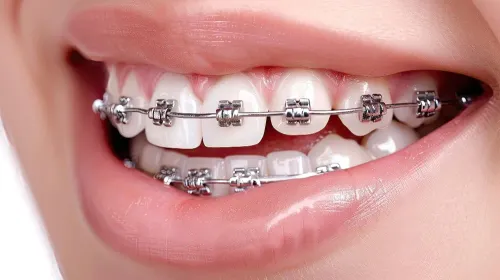
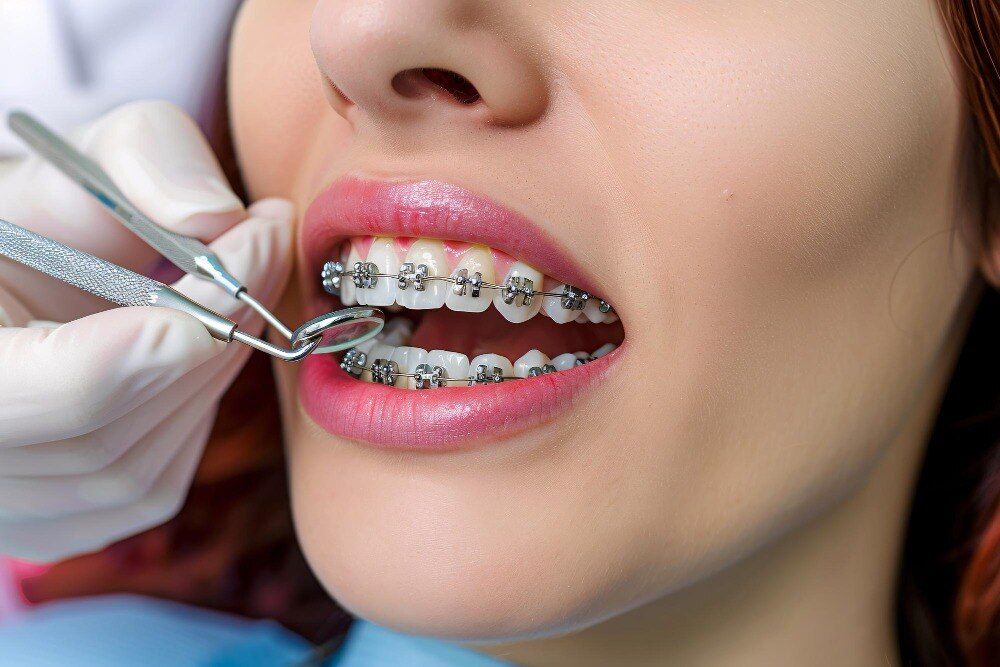
Both systems use bonded brackets and archwires to move teeth through planned wire changes. Conventional brackets hold the wire with an elastomeric ring or metal tie; self-ligating brackets use a built-in clip or sliding door.
| Option | Appearance | Cleaning, food and daily inconvenience |
|---|---|---|
| Conventional braces | Coloured or clear rings add a visible detail | Rings can trap food; avoid hard or sticky foods and clean around each tie |
| Self-ligating braces | No separate elastic ring, so the bracket may look less cluttered | The clip does not prevent food debris; avoid the same damaging foods and clean around the door |
The clip changes how the wire is secured, not the need for oral care. Both appliances create plaque-retentive areas around brackets and along the gumline. Skip brushing and you risk gingivitis, white-spot lesions and decay.
Brush twice daily with fluoride toothpaste and use interdental brushes, floss threaders or another clinician-approved method around the wire. Neither system makes interdental cleaning optional.
For someone researching self ligating braces versus regular braces in Hinjewadi, the practical baseline is simple: self-ligating brackets may remove the chore of changing elastic rings, but they do not remove food restrictions, cleaning time or fixed-appliance inconvenience. Both can rub the cheeks and require care when eating.
Do self-ligating braces really mean faster treatment and fewer visits?
A clip does not automatically shorten orthodontic treatment or remove discomfort. Review evidence has not established a clinically important advantage for self-ligating brackets over conventional brackets in total treatment time, number of appointments, pain or treatment outcome.
Treatment duration depends on the bite problem, crowding, spacing, required tooth movement, bone and gum health, your cooperation and the orthodontist’s plan. A self-ligating bracket does not generate force by itself; the clinician still selects the archwire sequence, activation, anchorage and any elastics or other auxiliaries.
Pressure after fitting or activation is normal because the wire is beginning to move teeth. Brackets and wires can also rub the cheeks, lips or tongue.
For the first few days after fitting or an adjustment:
- Choose soft foods and avoid biting hard foods with sore teeth.
- Press orthodontic wax over a bracket or wire that rubs.
- Use the pain-relief medicine recommended by your clinician rather than guessing the dose.
- Contact the clinic if a sharp wire or broken bracket continues to injure your mouth.
An adjustment appointment involves checking tooth movement, changing or activating the archwire, replacing elastic ligatures on traditional braces and checking the clips on self-ligating brackets. Self-ligating braces still require periodic visits.
Timing changes with the treatment stage, wire changes, elastic use, breakages and the clinician’s protocol, so ask for the expected visit frequency and emergency process before starting.
Which adult bite problems can each system treat?
Self-ligating braces for adults can treat mild or severe crowding, spacing, overbite, underbite and crossbite when the diagnosis and treatment plan support tooth movement.
| Problem | Self-ligating braces | Conventional braces |
|---|---|---|
| Crowding or spacing | Suitable for mild to severe cases | Treats the same broad range when planned appropriately |
| Overbite or underbite | Suitable when the cause is mainly dental | Same potential; elastics or other auxiliaries may be needed |
| Crossbite | Can correct many dental crossbites | Can correct the same types with suitable mechanics |
The bracket choice does not replace assessment of your teeth, bite, facial relationship, bone and gum health. Adults can undergo orthodontic tooth movement, but braces do not treat active gum disease, fill cavities, replace missing teeth or correct a severe skeletal jaw discrepancy.
A consultation may identify the need for:
- Periodontal treatment or fillings before braces
- Extractions or interproximal reduction to create space
- Elastics or temporary anchorage devices to control movement
- Oral surgery or a compromise plan when ideal correction is not possible
Adults have less growth modification potential than children. If the upper and lower jaws have a severe skeletal mismatch, orthognathic surgery may be necessary; changing from conventional to self-ligating brackets cannot remove that limitation. The right question is not which bracket sounds newer, but whether the proposed mechanics can safely address your specific bite.
What is the full treatment burden for a busy professional?
The workload starts before a bracket is fitted and continues after the last one is removed. It includes consultation, photographs, radiographs when indicated, bite diagnosis, treatment planning, and possible extractions, interproximal reduction, elastics or temporary anchorage devices.
- Consultation: Ask how long the examination and records appointment will take, and when you will receive the diagnosis and written plan.
- Active treatment: Request the expected interval between adjustment visits, the average appointment length, and which visits involve wire changes, elastic changes or clip checks.
- Additional procedures: Confirm whether extractions or other auxiliaries require separate appointments and coordination with work commitments.
- Repairs: Ask whom to contact for a broken bracket or poking wire, whether same-day or next-working-day repairs are available, and what to do until you are seen.
- Travel planning: Ask whether routine visits can be booked around work travel and how far in advance appointments are released; do not assume self-ligating brackets permit long gaps.
- Retention: Get the retainer type, wearing schedule, review interval and replacement process in writing after active treatment.
Missed adjustments, broken appliances and poor elastic wear can extend treatment regardless of bracket type. Failing to wear retainers can let teeth relapse. Anyone researching braces for working professionals wakad should obtain this schedule and emergency policy before starting, rather than accepting a fixed completion promise.
How should you choose between self-ligating and traditional braces?
Choose self ligating or traditional braces based on the treatment plan, not the bracket’s marketing claim. Ask what specific clinical benefit the orthodontist expects from the selected bracket in your case, how the wire sequence and anchorage will work, and whether another appliance offers a better trade-off.
| Option | Appearance and compliance | Key practical point |
|---|---|---|
| Self-ligating braces | Metal brackets; fixed appliance | Built-in clip does not replace planned wires, anchorage or cooperation |
| Traditional braces | Metal brackets; fixed appliance | Elastic ligatures hold the wire; capable of treating the same broad problems |
| Ceramic braces | Less visible; fixed appliance | Discreet, but still requires cleaning and food care |
| Clear aligners | Nearly invisible; removable | Require consistent wear; removing them too often can delay movement |
Before choosing, an orthodontist for adults in Hinjewadi should provide:
- A bite and facial assessment, with photographs and radiographs when indicated.
- A written plan covering risks, alternatives, expected treatment duration or range, wire changes, elastics, extractions or temporary anchorage devices when relevant.
- A retention plan stating which retainers you will use, when to wear them and how follow-up will work.
Ask about appointment intervals, emergency repairs and how travel affects visits. Deshmukh Dental Clinic can be considered by patients in Hinjewadi, Wakad and nearby areas seeking this case-specific comparison, rather than a consultation focused only on selling a bracket feature.
Related service
Orthodontics (Braces & Aligners) “Fast-track to a straighter smile! 🚀 Our Self-Ligating Braces use advanced technology for efficient tooth movement, reducing treatment time and... View service → |
Frequently asked questions
What actually differs between self-ligating and regular braces?
Both use bonded brackets and archwires. Regular brackets secure the wire with elastomeric rings or metal ties, while self-ligating brackets use an integrated clip or sliding door.
Do self-ligating braces mean faster treatment and fewer visits?
Not automatically. Treatment length and appointment frequency depend on your bite, tooth movement, wire changes, cooperation and the orthodontist’s treatment plan.
Which adult bite problems can each system treat?
Both systems can treat many cases involving crowding, spacing, rotated teeth and common overbites or underbites. Severe skeletal discrepancies may require extractions, auxiliaries, jaw-growth assessment or orthognathic surgery.
What is the full treatment burden for a busy professional?
Consider appointment frequency, travel time, missed-work risk, brushing around brackets, food restrictions, soreness after adjustments, emergency repairs and retainer wear after treatment.
How should you choose between self-ligating and traditional braces?
Choose based on the proposed mechanics, orthodontist’s experience, expected timeline, appointment pattern, hygiene needs, appearance, cost and your specific bite rather than the bracket label alone.
Keywords