Coffee and tobacco usually leave discoloration on the tooth surface, but a dark mark can also signal decay, gum disease, or a change inside the tooth. You will learn how to tell these problems apart, which cleaning or whitening option fits each one, and how to reduce new staining without wearing down your enamel.
Key takeaways
- Brush twice daily with fluoride toothpaste and clean between teeth.
- Do not scrape stains with metal tools, lemon, charcoal, or baking soda.
- Choose polishing for surface stains and examination for calculus or dark patches.
- Rinse with water after coffee and arrange a dental check for persistent stains.
Why coffee and tobacco leave different-looking stains
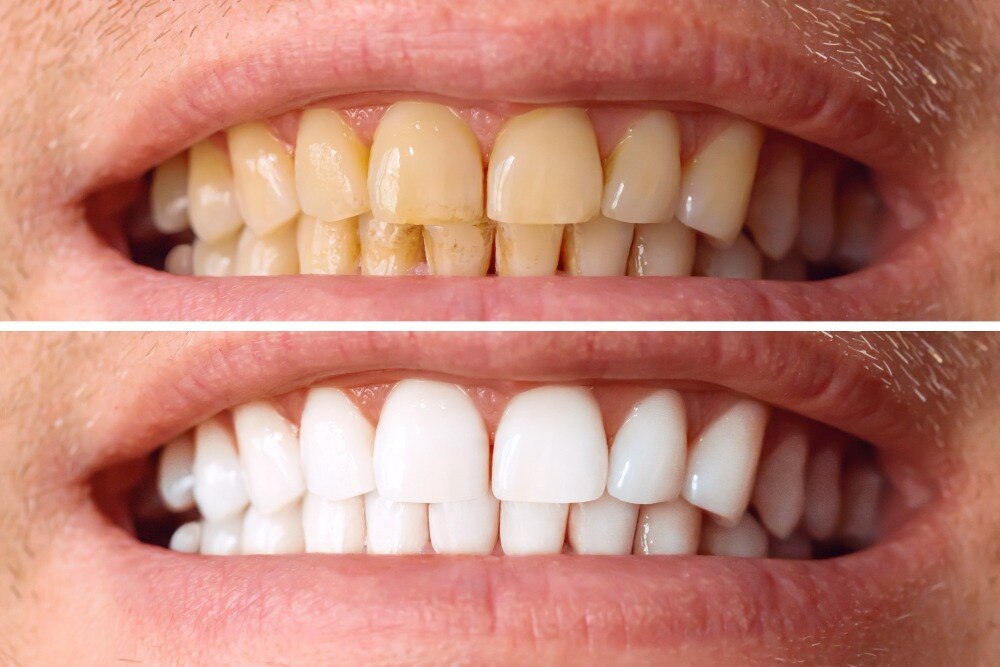
Coffee and tobacco usually leave extrinsic stains: colored compounds cling to the acquired protein pellicle coating enamel. Coffee’s pigments repeatedly bathe teeth, so frequent sipping builds yellow-brown film. Tobacco smoke and chewing tobacco add tar-like resins and oxidized nicotine, often producing darker brown or black deposits, especially near the gumline and in rough calculus.
That does not mean every dark mark sits on the surface. Enamel can look gray or brown from fluorosis, trauma, tetracycline exposure, or age-related dentin showing through; decay can appear as a brown or black spot. A filling can also discolor or leak at its edge.
Scaling and polishing may remove plaque, calculus, and external stain, but cannot reliably change color inside enamel or dentin.
Ask for an examination rather than repeating polishing if the mark stays after professional cleaning, or if you notice:
- Pain or sensitivity around one spot
- Bleeding or swollen gums
- Loose teeth or persistent bad breath
- A dark area beside or under a filling
- A hole, rough edge, or surface that catches floss
These findings can indicate decay, gum disease, trauma, or failing dental work. Whitening changes tooth color; it does not repair decay or recolor a restoration. To remove coffee stains from teeth, cleaning may be enough for surface buildup, while intrinsic discoloration needs a different plan.
Safe home care that removes buildup without damaging enamel
At home, use gentle plaque control to limit coffee and tobacco buildup: brush twice daily for two minutes with fluoride toothpaste and a soft-bristled brush. Scrubbing harder does not remove deeper discoloration; it can wear enamel and expose yellower dentin.
Clean between teeth once daily with floss or interdental brushes. Rinse with water after coffee, and avoid sipping one cup over several hours because repeated contact leaves more colored compounds on the tooth surface.
To remove tobacco stains from teeth, stopping tobacco matters more than repeating home polishing. New deposits continue while tobacco use continues, and tobacco also raises the risks of gum disease, tooth loss, delayed healing, and oral cancer.
| Method | What it does | Safe choice |
|---|---|---|
| Fluoride toothpaste and soft brush | Removes plaque and loose surface buildup; does not bleach teeth | Use twice daily without force |
| Interdental cleaning | Removes deposits a toothbrush misses between teeth | Use once daily |
| Water after coffee | Dilutes and clears residue | Rinse soon after drinking |
| Lemon juice or vinegar | Acid can dissolve enamel minerals | Avoid |
| Charcoal or coarse baking-soda scrubbing | Abrasion may remove pigment while wearing enamel or dentin | Avoid |
| Household peroxide | Uncontrolled strength can irritate gums and damage tissues | Do not use |
These steps reduce accumulation but cannot change intrinsic color, decay, gum-related deposits, or discoloration in fillings and crowns. Book an examination instead of escalating DIY remedies when a mark remains after gentle cleaning.
Which treatment matches the type of stain?
They do not remove the same stains. Whitening toothpaste and polishing target the surface; peroxide strips, trays, and professional whitening lighten the natural tooth beneath it.
| Option | What it removes | Main limitation |
|---|---|---|
| Whitening toothpaste | Light surface stain from coffee or tobacco | Cannot remove calculus or reliably change intrinsic tooth color |
| Polishing or air polishing | Surface stain after plaque and calculus are removed | Does not lighten enamel or dentin that is naturally dark or internally discolored |
| Whitening strips | Mild intrinsic discoloration and some surface staining | Works unevenly around fillings, crowns, gumlines, and heavily stained areas |
| Whitening trays | Peroxide-based lightening of natural teeth | Requires correct fit and does not whiten restorations or remove calculus |
| Professional whitening | More controlled peroxide whitening of natural tooth structure | Does not remove plaque, calculus, decay, or stains in fillings |
A professional stain removal teeth appointment starts with an examination, followed by scaling to remove hardened calculus and polishing or air polishing for remaining surface deposits. Brushing cannot remove calculus once plaque has hardened.
Choose cleaning when tobacco or coffee has left a removable coating. Choose whitening when the tooth itself looks darker after the surface is clean. You may need both.
A brown or gray mark that remains after cleaning needs diagnosis. Decay, fluorosis, trauma, tetracycline staining, aging-related dentin color, gum disease, or defective dental work will not be solved by repeated toothpaste or polishing.
How to reduce new coffee and tobacco stains
Drink coffee in fewer, shorter exposures rather than sipping it across several hours. Coffee repeatedly bathes the enamel in dark compounds, so prolonged contact gives stains more opportunity to build.
1. Rinse your mouth with plain water after coffee. This dilutes the remaining pigments without replacing coffee with an acidic drink, and it helps limit accumulation between brushing sessions.
2. Brush twice daily with fluoride toothpaste and clean between your teeth every day. A toothbrush removes plaque that traps stain, but it cannot remove calculus once plaque has hardened; a dental professional must remove that deposit.
3. Stop tobacco use to prevent tobacco stains from returning. Repeated cleanings cannot keep pace with continued exposure, and stopping also reduces risks linked to gum disease, tooth loss, delayed healing and oral cancer. If stopping feels difficult, ask a doctor or tobacco-cessation service for support.
4. Do not scrub harder when a stain appears. Lemon juice, vinegar, charcoal powder, abrasive baking-soda scrubbing and household peroxide can irritate gums or wear enamel without reliably changing the tooth’s internal colour.
These steps reduce new surface buildup, but they do not bleach enamel or dentin. A professional cleaning can remove much external coffee or tobacco discoloration; whitening is a separate treatment for suitable intrinsic colour.
If your goal is to remove coffee stains from teeth or remove tobacco stains from teeth, the right choice depends on whether the mark is surface stain, hardened calculus, decay or discoloration inside the tooth.
When a dental examination is the right next step
Choose professional assessment when the colour remains after thorough brushing, or when a dark mark does not disappear with gentle polishing. Repeating whitening or cosmetic polishing can waste time and irritate teeth while leaving decay, gum disease, or a damaged filling untreated.
A dental examination separates the common possibilities:
| Option | What the examination may find | Why repeating home treatment fails |
|---|---|---|
| Surface coffee or tobacco stain | Plaque, calculus, and pigment on enamel | Whitening cannot remove hardened calculus; scaling and polishing are needed |
| Intrinsic discoloration | Colour within the tooth, including ageing or trauma-related change | Surface polishing cannot reach the discoloured tooth structure |
| Decay or gum disease | A cavity, bleeding inflammation, swelling, or infection | Cosmetic treatment masks the warning sign instead of treating its cause |
| Stained dental work | A filling, crown, veneer, or restoration that no longer matches | Whitening changes natural teeth, not most existing restorations |
Bleeding during cleaning, swollen gums, loose teeth, persistent bad breath, sensitivity, or pain warrants assessment rather than another abrasive product. Lemon juice, vinegar, charcoal powder, baking soda scrubbing, and household peroxide can erode enamel or wear dentin.
The usual professional sequence is examination, scaling to remove calculus, and polishing or air polishing for superficial stain. Whitening is separate: peroxide lightens tooth colour, so it is chosen only after the examination identifies a suitable target.
Deshmukh Dental Clinic can assess whether the request behind stain removal teeth Hinjewadi or teeth stain removal Wakad calls for cleaning, whitening, or restorative care.
Related services
Advanced Teeth Whitening (Bleaching) “Say goodbye to stubborn stains! 😁 Our expert stain removal treatment effectively removes tough tooth stains, revealing a brighter, healthier smile. View service → |
Advanced Teeth Whitening (Bleaching) Transform your smile with our expert dental care services! 😊 Our team of experienced dentists and hygienists are dedicated to providing top-notch... View service → |
Frequently asked questions
Why do coffee and tobacco stains look different?
Coffee usually creates yellow-brown surface discoloration from repeated pigment exposure. Tobacco can create darker brown or black deposits, especially where tar, nicotine residue, and calculus collect near the gumline.
How can you remove coffee stains from teeth at home?
Brush twice daily with fluoride toothpaste, clean between your teeth, and rinse with water after coffee. Avoid acidic scrubs and abrasive powders because they can wear enamel or irritate gums.
Can tobacco stains be removed with regular brushing?
Brushing can reduce fresh surface residue, but hardened calculus and deep deposits need professional cleaning. Stopping tobacco use prevents continued staining and lowers oral health risks.
Which treatment matches the type of tooth stain?
Professional polishing suits surface stains on enamel. Scaling removes hardened calculus near the gums. Whitening treats suitable natural tooth discoloration after an examination, but it does not remove fillings, crowns, or calculus.
When should you see a dentist for stained teeth?
Book an examination when stains remain after careful cleaning, feel rough, sit along the gumline, appear as isolated black or white patches, or come with bleeding, pain, sensitivity, or bad breath.
Related services
In-Office Laser Whitening [10:16 am, 14/1/2026] G: need more sentence “Get a brighter smile in just one visit! 😁 Our in-office laser whitening treatment is quick, painless,... View service → |
Advanced Teeth Whitening (Bleaching) “Get professional whitening results at home! 😊 Our custom-fit Home Whitening Kits are designed to brighten your smile safely and effectively. View service → |
Keywords