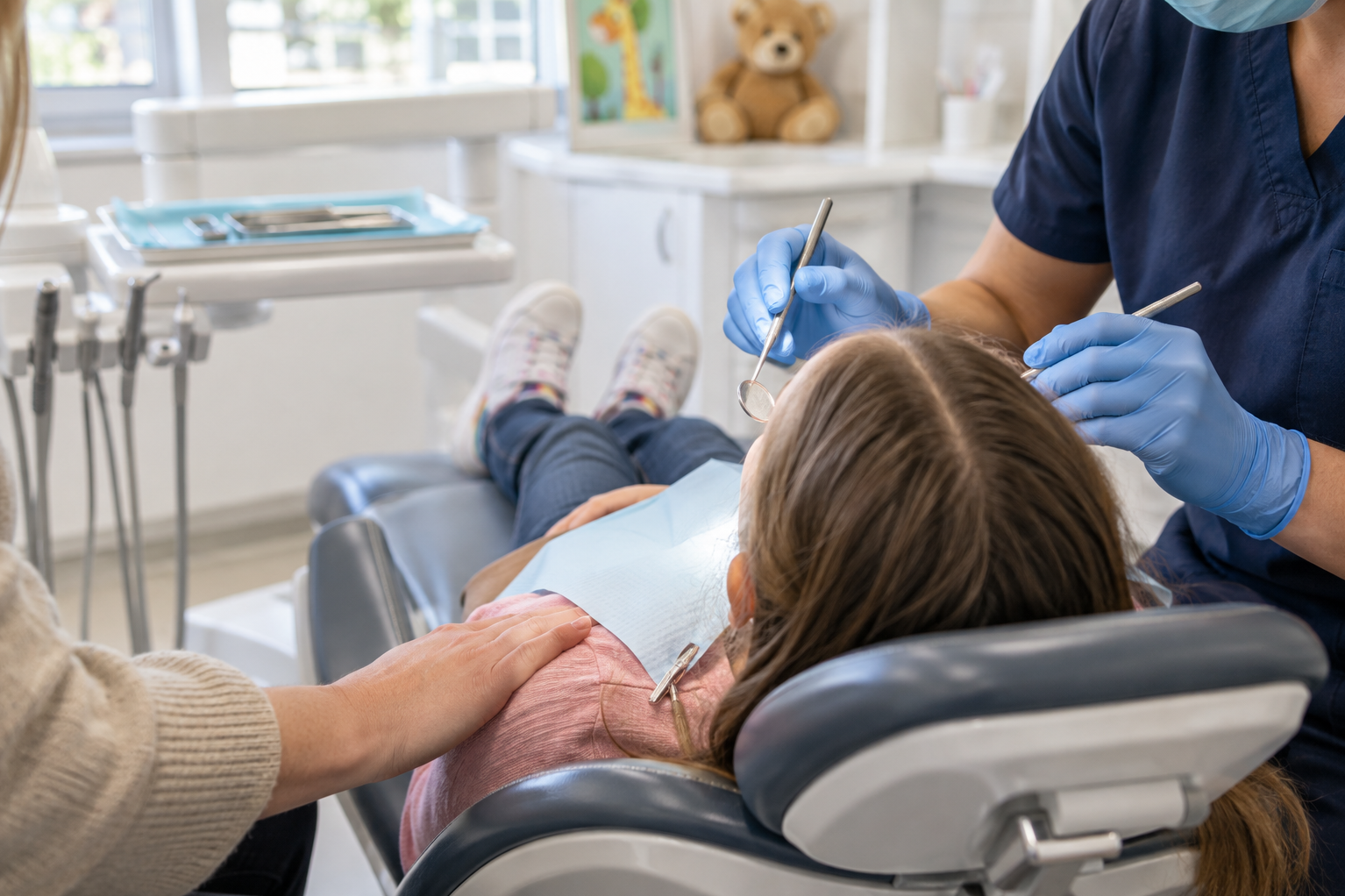
A child with tooth pain may struggle to explain exactly where it hurts or what triggered it. Some children become irritable, avoid food or wake during the night instead of reporting a toothache directly. Timely Kids Dental Treatment can identify the cause and prevent a manageable problem from becoming a dental emergency.
Parents in Wakad should seek professional evaluation when symptoms persist, even if the affected tooth is a baby tooth.
Common Reasons Children Need Treatment
Children may require dental care for:
- Cavities
- Broken or chipped teeth
- Tooth sensitivity
- Gum swelling
- Dental infections
- Mouth injuries
- Delayed or unusual tooth eruption
- Premature loss of baby teeth
- Retained baby teeth
- Pain while biting
- Habit-related dental changes
The treatment selected depends on the child’s age, cooperation, cavity depth and the expected life of the affected tooth.
Managing Cavities in Baby Teeth
Small cavities may be restored with suitable filling materials. When decay reaches deeper layers, pulp treatment and a protective crown may be required to preserve the tooth.
A severely damaged or infected tooth that cannot be restored may need removal. If a baby tooth is lost earlier than expected, the dentist may evaluate whether a space maintainer is needed to protect room for the permanent tooth.
Waiting for a decayed baby tooth to fall out naturally can expose the child to pain, infection and eating difficulties.
What to Do After a Tooth Injury
Falls and sports injuries are common during childhood. Parents should contact a dentist promptly after a tooth is displaced, fractured or knocked out.
If a permanent tooth is completely knocked out:
- Hold it by the crown, not the root.
- Avoid scraping or scrubbing the root.
- If dirty, rinse it gently without prolonged handling.
- Seek urgent dental care.
- Follow professional instructions for safe transport.
A knocked-out baby tooth should not be pushed back into its socket because doing so may damage the developing permanent tooth.
Facial swelling, uncontrolled bleeding, loss of consciousness, suspected jaw injury or breathing difficulty requires urgent medical evaluation.
Helping an Anxious Child
Children may fear unfamiliar sounds, equipment or previous painful experiences. Behaviour guidance helps the dental team introduce treatment at an appropriate pace.
Useful methods may include:
- Simple age-appropriate explanations
- Demonstrating instruments before use
- Short introductory visits
- Positive reinforcement
- Distraction
- Planned breaks
- Gradual completion of treatment
Some children with extensive needs, very young age, special healthcare requirements or severe anxiety may need advanced behaviour-management options. These require careful medical assessment, informed consent and appropriate monitoring.
When Toothache Needs Prompt Attention
Parents should not delay care when a child has:
- Facial swelling
- Fever with dental symptoms
- Difficulty opening the mouth
- Difficulty swallowing
- Pus near a tooth
- Severe night pain
- Pain that prevents eating
- Trauma to a permanent tooth
- Swelling spreading toward the eye or neck
Pain medicine may provide temporary relief but does not remove decay or treat the source of infection. Antibiotics are also not a substitute for dental treatment and should only be given when prescribed.
Preparing for the Appointment
Parents should bring information about the child’s medical conditions, allergies, medicines and previous dental experiences. It is also useful to explain when symptoms started and whether pain is triggered by eating, temperature or biting.
Deshmukh Dental Clinic plans Kids Dental Treatment according to the child’s clinical needs and ability to cooperate. Families from Wakad and neighbouring Pune areas receive explanations about available treatment choices, expected appointments and home care.
Children benefit when treatment is completed before pain creates stronger dental fear. Calm communication, timely diagnosis and preventive follow-up can make future visits easier for both the child and the family.
Keywords