You should not arrive expecting immediate tooth filing or a fixed price based only on the number of veneers. By the end of the appointment sequence, you will know what the dentist examines, when enamel preparation is required, how you approve the design, and what to expect during fitting and follow-up.
Key takeaways
- Expect examination of teeth, gums and bite before any veneer preparation.
- Veneers suit healthy teeth with enough enamel and a stable bite.
- Ask how digital design, temporary veneers and laboratory fabrication fit your timeline.
- Protect fitted veneers with daily cleaning, a night guard and regular reviews.
What happens at the first veneers consultation near Wakad?
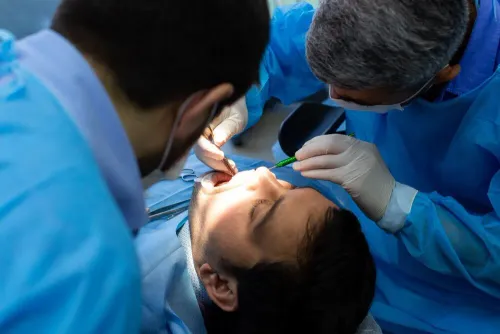
A veneers consultation near Wakad should begin with diagnosis, not drilling. The dentist examines each proposed tooth for cavities, cracks, old fillings, enamel thickness, staining and infection. The gum assessment checks bleeding, swelling, recession and pocketing; the bite review checks contact when you close, speak and move your jaw.
Expect questions about clenching, grinding, jaw pain, previous cosmetic work and your desired result.
Bring these items:
- Medicines, allergies, previous dental treatment and relevant medical conditions
- Photographs showing your preferred tooth length or shape
- Questions about how many teeth need treatment, whether a mock-up is included and how many visits are expected
Ask to compare the options before discussing fees:
| Option | What it means | Main point to clarify |
|---|---|---|
| Porcelain laminate veneer | Laboratory-made covering for the visible front surface | Shade, translucency, preparation and replacement |
| Direct composite laminate | Composite shaped and bonded directly to the tooth | Repairability, staining and expected maintenance |
| Full crown | Restoration covering most or all of the tooth | Why greater coverage is needed |
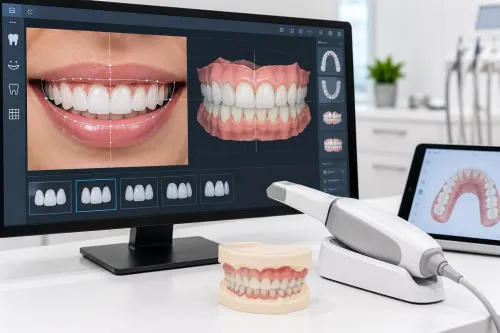
The dentist may take clinical photographs, an intraoral scan or impressions. X-rays investigate decay, cracks, root problems or extensive fillings; they do not replace a visible examination.
Discuss whitening first because veneers do not lighten like natural enamel. Confirm the final shade after whitening stabilises, and ask what happens if you dislike the proposed length or contour. This diagnostic stage of a veneer laminate appointment in Wakad is not when anything should be permanently bonded.
How does the dentist decide whether veneers are suitable?
A dentist decides veneer suitability by checking disease, tooth structure, bite and position before planning any cosmetic change. Active decay, untreated gum disease, poor plaque control, a cracked tooth, inadequate enamel or a tooth needing substantial structural support can rule out a veneer until treatment is complete.
The red flags include:
- Pain, infection or gum disease: a veneer hides symptoms but does not cure the cause.
- Severe crowding or an uneven bite: tooth movement may be needed first.
- Heavy grinding or clenching: these forces can chip, loosen or fracture veneers.
- Too little space: adding material without room can create bulky, outward-projecting no-preparation veneers.
A night guard can protect veneers in controlled grinding, but it does not make every high-risk case suitable. The dentist also checks whether whitening, orthodontics or minor reshaping would solve the concern with less intervention. These checks form the veneer laminate treatment steps Wakad patients should expect before accepting a plan.
| Option | Treats | Key trade-off |
|---|---|---|
| Whitening | Dark or yellow natural teeth | Does not reliably lighten existing porcelain |
| Orthodontics | Crowding or tooth position | Requires movement before cosmetic bonding |
| Enamel reshaping | Minor shape irregularities | Removes limited enamel |
| Composite bonding | Small chips or edge changes | Easier to repair but wears and stains sooner |
| Filling or crown | Decay or substantial damage | May provide safer structural support |
During a veneer laminate appointment Wakad patients should ask which problem each option treats, how much tooth structure it removes, how long it lasts and what maintenance it requires.
What happens during preparation, design and the laboratory stage?
A mock-up comes before irreversible preparation. A diagnostic wax-up, digital design or temporary trial smile shows tooth length, width, contour, smile-line visibility, lip support and speech. View it from normal conversation distance, not only in a close-up photograph.
Report teeth that look too long, opaque, prominent or bulky; a digital preview cannot guarantee the final shade or fit.
1. Accept the plan only after reviewing the alternatives. Orthodontics, whitening, enamel reshaping, composite bonding, a filling or a crown may treat the underlying concern more safely.
2. For porcelain veneers, the dentist removes a controlled amount of enamel when space and a defined margin are needed. The amount depends on tooth position, existing fillings, desired contour and material. No-preparation veneers are not automatically more conservative; without space, they can create over-contoured teeth.
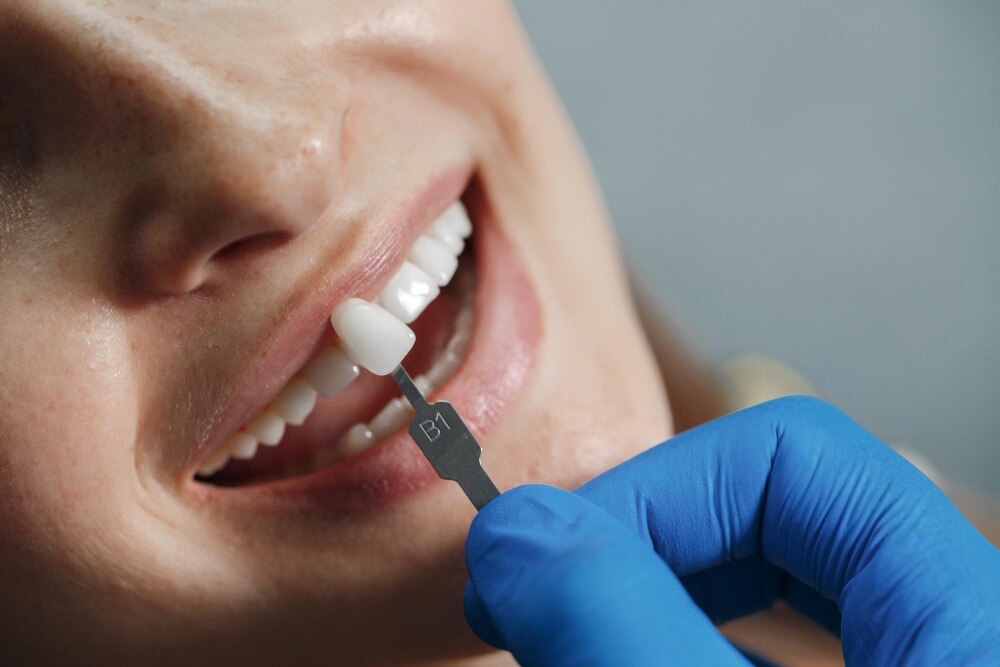
3. The dentist records the prepared teeth with an intraoral scan or impression and sends a laboratory prescription. It should specify shade, translucency, surface texture, incisal effects, tooth proportions and photographs, not just one shade tab.
4. Ask whether temporary veneers will protect the teeth while the laboratory fabricates the final restorations. Gum treatment, orthodontics or laboratory delays can add visits.
5. These veneer laminate treatment steps Wakad patients should expect differ by material. Composite may be shaped and bonded directly, while porcelain requires laboratory fabrication and a fitting visit.
| Option | Main advantage | Main limitation |
|---|---|---|
| Composite laminate | Easier repair; fewer visits | Stains and wears sooner |
| Porcelain laminate | More stable surface appearance | Laboratory work; replacement after fracture or debonding |
Ask for the material brand, repair policy and total appointments before approving laminate smile treatment in Pune.
What happens during the veneer fitting appointment?
1. At a veneer fitting appointment in Wakad, the dentist first checks each veneer against the prepared tooth and the surrounding smile. Under suitable lighting, they assess shade, translucency, surface texture, width, length, contact points and margin fit.
A try-in medium or equivalent holds the veneers in place temporarily. View them while smiling, speaking and resting your lips, because an isolated veneer can look acceptable yet appear too long, opaque, prominent or bulky in the full smile.
2. Request changes to shade, length, contour or tooth shape before approval. Once the veneers are bonded, altering those features becomes more limited and can affect thickness or surface polish.
These veneer fitting appointment details matter: the dentist should record your approval only after you have assessed the appearance from normal conversation distance, not just through a close-up photograph.
3. The dentist checks your bite with the veneers positioned. Close your teeth, slide your jaw and speak so high contacts or interference become noticeable before bonding.
After approval, the teeth are isolated from saliva and blood, conditioned, and bonded with adhesive resin cement. The dentist cures the cement, removes excess around the margins, flosses between contacts and checks the bite again.
4. You may feel pressure, vibration or water during preparation. Local anaesthetic is used when preparation reaches a sensitive area or gum shaping is required; minimal preparation and direct composite work do not always need it.
Mild sensitivity or gum tenderness can follow. Persistent pain, a high bite, sharp edge, movement, gum irritation or a loose veneer needs dental review. Do not file, adjust or re-bond it yourself.
How should you prepare for follow-up and protect the result?
Eat normally before the appointment unless your dentist gives different instructions. Tell the clinic if you have a sore throat, mouth ulcer or active dental pain, because treatment or scheduling may need review.
After bonding, follow the local-anaesthetic instructions:
- Do not chew until normal feeling returns.
- Avoid very hot food and drinks while numb.
- Resume normal brushing with fluoride toothpaste and gentle flossing once sensation returns.
- Choose softer foods if your gums feel tender.
- Do not bite ice, pens, fingernails, packaging or very hard foods with veneered teeth.
| Material | Follow-up and maintenance | Common trade-off |
|---|---|---|
| Composite | Fewer visits; polishing or repair may be needed sooner | Stains and wears sooner |
| Porcelain | Laboratory fabrication and a separate fitting visit are common | More stable appearance, but chips or debonding usually require replacement |
Brush twice daily, clean between every tooth and attend examinations and professional cleaning at the interval your dentist recommends. A night guard can protect veneers if you grind or clench. Either material can chip, debond, stain at the margin or need replacement, so ask about warranty coverage, repairs and emergency adjustments.
For laminate smile treatment in Pune, ask Deshmukh Dental Clinic to record the veneer fitting appointment details in writing: visit count, laboratory turnaround, temporary veneers, review date and total fee. If travelling from Hinjewadi or Wakad, allow time for a separate adjustment visit rather than booking fitting immediately before travel or an event.
Related service
Laser & Cosmetic Dentistry (Smile Designing) “Transform your smile with a flawless finish! 😊 Our Veneers & Laminates service offers a minimally invasive way to correct imperfections and achieve... View service → |
Frequently asked questions
What happens at the first veneers consultation near Wakad?
The dentist examines proposed teeth for cavities, cracks, fillings, enamel thickness, staining and infection. They also assess gum bleeding, swelling, recession, pocketing and bite contacts during closing, speaking and jaw movement.
How does the dentist decide whether veneers are suitable?
The dentist checks oral health, available enamel, tooth structure, gum condition, bite forces and your cosmetic goals. Active decay, infection, gum disease or an unstable bite must be addressed before veneers.
What happens during preparation, design and the laboratory stage?
The dentist agrees on tooth shape, colour and proportion, prepares only the planned enamel when appropriate, records scans or impressions, and sends the design to a dental laboratory. Temporary restorations can protect prepared teeth while laminates are made.
What happens during the veneer fitting appointment?
The dentist tries each veneer on the tooth, checks shade, margins, shape, speech and bite, then bonds it after approval. They remove excess cement and polish the restoration before checking your bite again.
How should you prepare for follow-up and protect the result?
Clean around veneers with a soft toothbrush and fluoride toothpaste, floss daily, avoid biting hard objects, and wear a prescribed night guard. Attend reviews so the dentist can check margins, gums and bite.
Keywords